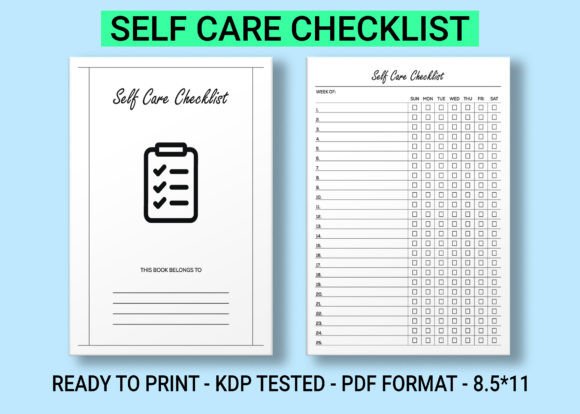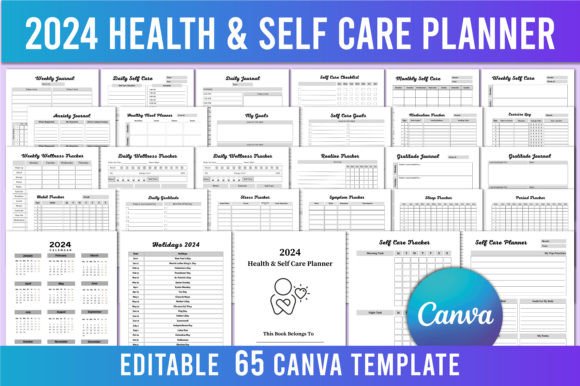
Editable 2024 Health Self Care Planner
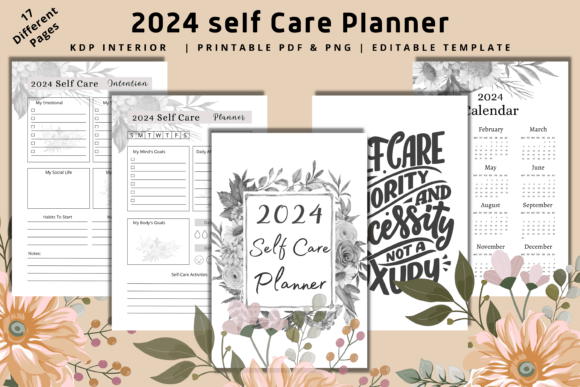
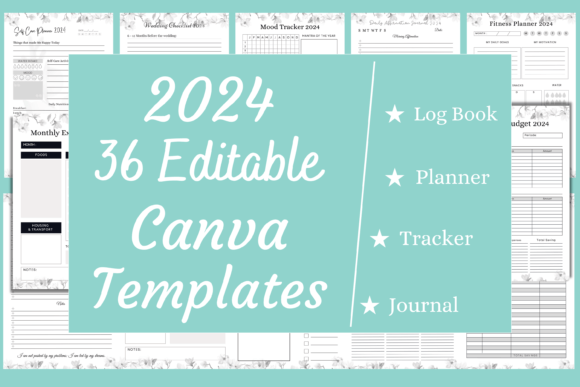
If you have ever felt overwhelmed by the sheer number of things you want to track for your health, you already understand why a structured system matters. The Editable 2024 Health Self Care Planner is not just a set of pages. It is a flexible toolkit designed to help you check in with yourself regularly, without turning that check-in into another chore. Whether you prefer working inside Canva, printing a PDF, or keeping a JPEG handy on your tablet, this planner adapts to how you actually live.
When life feels like a long to-do list
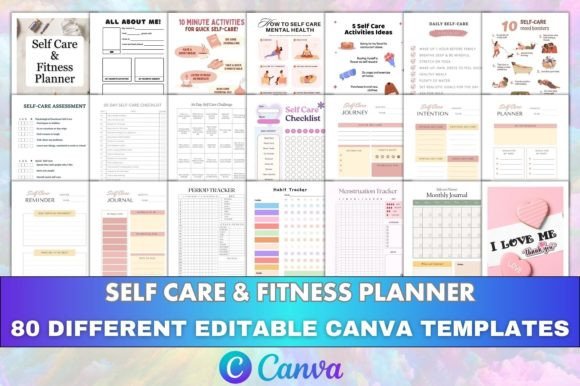
Many of us move through our days reacting to whatever comes next. Work deadlines, family obligations, social commitments, and unexpected stressors pile up quickly. In those moments, self care often becomes something you plan to get to later. The reality is that later rarely arrives. That is where a planner like this one steps in. It gives you a dedicated space to pause, even if only for five minutes. The Daily Journal and Daily Self Care pages are structured enough to guide you but open enough that you can adapt them to whatever you are feeling that day.
Think about a Tuesday when you woke up already tired. You might flip to the Mood Tracker and simply note how you feel without judgment. Then you glance at the Sleep Tracker and realize you only got five hours. That small observation can change how you approach the rest of your day. Instead of pushing through with caffeine and willpower, you might decide to prioritize rest later. The planner does not tell you what to do, but it helps you notice patterns you would otherwise miss.
For the person who wants more than a checklist
Self care planners sometimes feel too rigid. You fill in boxes and check off tasks, but you do not actually connect with what you are doing. This editable set includes several pages that encourage reflection rather than just tracking. The Reframe Your Thoughts page, for instance, asks you to look at a negative thought and rewrite it. That is not something you can automate. It requires a moment of honesty. Similarly, the Letter To Anxiety page gives you a safe outlet for worries that might otherwise loop in your head all day.
For someone who deals with anxiety regularly, that page alone can be a relief valve. You do not need to solve everything. You just need to name it, write it down, and let it exist outside your mind. The Anger Log and Anger Buttons pages serve a similar purpose. They help you identify triggers before they escalate. Over time, you start to see patterns. Maybe you notice that your anger spikes after certain meetings or when you skip meals. That awareness is more valuable than any generic advice about staying calm.
Why the Canva link matters for different users
One of the biggest strengths of this planner is its versatility across platforms. The Editable 2024 Health Self Care Planner For Canva option means you can customize colors, fonts, and layouts without needing design skills. If you are someone who likes things to look a certain way, you can tweak the planner until it feels like yours. That personal connection makes you more likely to use it consistently.
For a busy parent, printing a PDF and keeping it on a clipboard might be the simplest route. You do not want to open a laptop every time you need to log your water intake or track your meals. The Water Tracker and Healthy Meal Planner pages are straightforward enough that you can fill them in with a pen while your coffee brews. On the other hand, if you are a digital native who keeps everything on your tablet, the PNG and JPG files let you import the pages into apps like GoodNotes or Notability. You can write with a stylus and keep all your data in one place.
Someone who runs a small wellness coaching business might use the Canva link differently. They could create a branded version for their clients, adjusting the Self Care Goals or Therapy Notes pages to fit their specific programs. The same planner serves both personal and professional use, depending on how you approach it.
Tracking what actually matters to you
Health is not just about what you eat or how much you exercise. It is also about your mental state, your relationships, and your environment. This planner includes a wide range of trackers, but they are not there to overwhelm you. You choose what matters right now. Maybe this month you focus on the Gratitude Journal and the Mood Tracker. Next month, you might add the Symptom Tracker and Stress Tracker if you are dealing with a health issue.
The Period Tracker is particularly useful for anyone who wants to understand how their cycle affects their energy and mood. When you log your period alongside your sleep and stress levels, patterns emerge. You might notice that your anxiety increases right before your period starts. That is not something to fix, but it is something to plan around. You can schedule easier tasks for those days and give yourself more grace.
Similarly, the Exercise Log and Medication Tracker pages help with consistency. If you take daily medication, it is easy to forget whether you took it, especially when your routine changes. A simple checkbox on the Medication Tracker removes that doubt. For workouts, the log helps you see progress over time. Even on days when you do not feel like moving, seeing a streak of checkmarks can motivate you to keep going.
Scenarios where this planner fits naturally
Imagine you are going through a stressful life transition, like a move, a job change, or a breakup. Your usual coping mechanisms might not work. The Stress Tracker and Anger Log become essential tools for processing your emotions without bottling them up. The Declutter Checklist might seem unrelated, but organizing your physical space often helps clear mental clutter. You can tackle one small area at a time, and the checklist gives you a sense of accomplishment.
If you are someone who sets ambitious goals but struggles to follow through, the Self Care Goals and My Goals pages help you break things down. Instead of writing vague intentions like take better care of yourself, you can specify something measurable, like drink six glasses of water daily or walk for twenty minutes after lunch. The Daily Review page lets you reflect at the end of the day on what worked and what did not. That feedback loop is crucial for making lasting changes.
For people who deal with chronic illness or ongoing health concerns, the Symptom Tracker and Doctor Visits and Appointments pages are practical necessities. You can log symptoms daily and share the data with your healthcare provider. That gives your doctor a clearer picture than your memory could provide. The Therapy Notes pages are useful for anyone in counseling. You can jot down insights between sessions and track your progress over time.
What to consider before diving in
While this planner is comprehensive, it is important to remember that you do not need to use every page simultaneously. New users sometimes feel pressure to fill everything out, which defeats the purpose. Start with two or three trackers that address your most immediate needs. Add more pages gradually as you build the habit. The 30 Days Challenge and 30 Days Of Gratitude pages are great entry points because they have a clear timeline and feel less open-ended.
Another consideration is format choice. The PDF, JPG, and PNG files offer flexibility, but they each behave differently depending on your device. If you plan to use the planner on a tablet, test a sample page first to make sure the writing experience is smooth. If you are printing, check that the page size aligns with your printer settings. The file specifications note 8.5 x something, which likely refers to the standard US letter size, but confirm before you print a large batch.
One limitation worth noting is that the planner is designed as a printable or digital fillable resource, not an app. It does not send you reminders or sync across devices automatically. You have to remember to use it. That said, many people prefer this approach because it keeps their data private and offline. There is no subscription fee and no risk of your information being stored on a third-party server. You own the files completely.
Small touches that make a difference
The Favorite Quotes and It is Okay To pages might seem like extras, but they serve an important psychological function. They remind you that self care is not just about fixing problems. It is also about celebrating what you love and giving yourself permission to rest. The Bucket List and Vision Board pages help you connect your daily actions to your bigger aspirations. When you feel stuck, looking at your vision board can reorient your focus.
For anyone who works with a therapist or coach, the Therapy Notes pages offer a structured way to reflect between sessions. You can track your homework, note breakthroughs, and identify recurring themes. Over time, these notes become a personal archive of your growth. The Activity Planning page is useful for people who struggle with executive function or decision fatigue. Instead of deciding what to do on the spot, you can plan your week ahead and reduce mental load.
The Positive Affirmations and Change Your Mindset pages might feel awkward at first if you are not used to that kind of practice. But they work best when you treat them as experiments. Try writing one affirmation each morning for a week and see how it affects your outlook. If it helps, keep going. If it does not, skip that section and focus on something else. The planner is yours to adapt.
Final observations on using this planner long-term
Consistency is the biggest challenge with any self care tool. The first week feels exciting. By week three, you might skip a day. That is normal. The key is to not view skipped days as failures. The Daily Self Care page includes space for simple entries, so even a one-line check-in counts. Over months, the accumulated data gives you a rich picture of your mental and physical health. You can look back at your Mood Tracker from January and see how far you have come by June.
For families, this planner can also serve as a shared resource. Print multiple copies and use the Weekly Wellness Tracker to check in with each other. Parents can model self care for their children by filling out their own pages. It normalizes the practice of checking in with your emotions and prioritizing rest.
Ultimately, the Editable 2024 Health Self Care Planner is a flexible system that meets you where you are. Whether you are navigating a difficult season or simply want to maintain balance, the structure is there when you need it. You decide how deep to go. And because it is editable, it can evolve with you. Next year, you might revisit the 30 Days Of Yoga challenge or create a new bucket list. The pages you ignore today might become exactly what you need six months from now.