Handwriting Practice Paper for Kids: Why It Matters and How to Use It Effectively
In a world dominated by keyboards and touchscreens, the art of handwriting might seem like a skill from a bygone era. Yet, for children, learning to write by hand remains one of the most foundational and beneficial activities for cognitive development, fine motor skills, and academic success. Handwriting practice paper for kids is not just a tool—it's a gateway to confidence, creativity, and clear communication. Whether you're a parent, teacher, or homeschooler, understanding how to choose and use the right handwriting practice materials can make a world of difference in a child's learning journey.
This article explores everything you need to know about handwriting practice for kids, including what makes great practice paper, how to use it effectively, and why giving your child a head start with proper handwriting tools sets them up for lifelong success. We'll break down the key features of high-quality handwriting practice paper, how it helps children learn letters and numbers, and practical tips for integrating it into daily routines.
Why Handwriting Practice Still Matters in the Digital Age
It's easy to assume that handwriting is becoming less important, but research consistently shows that the physical act of writing by hand engages the brain in unique ways. When children form letters with a pencil on paper, they activate neural pathways that support reading, spelling, and comprehension. Handwriting practice also builds fine motor skills, hand-eye coordination, and spatial awareness—abilities that extend far beyond the classroom.
Moreover, handwriting is a form of personal expression. A child who feels confident in their ability to write legibly and neatly is more likely to enjoy writing assignments, express ideas freely, and take pride in their work. Handwriting practice for kids isn't just about perfect letters; it's about building a positive relationship with written communication from an early age.
What Makes Great Handwriting Practice Paper?
Not all handwriting paper is created equal. The best handwriting practice paper for kids is thoughtfully designed to support the learning process at every stage. Here are the key features that set high-quality practice paper apart:
Wide Lines and Dotted Centers
The hallmark of effective handwriting practice paper is the presence of wide lines with a dotted center guideline. This simple but ingenious design helps children understand where each part of a letter belongs. The top line guides tall letters like "b" and "d," the bottom line anchors the letter, and the dotted midline shows where lowercase letters like "a" and "e" should sit. This visual structure is essential for beginners and remains helpful as children refine their skills.
Ample Practice Space
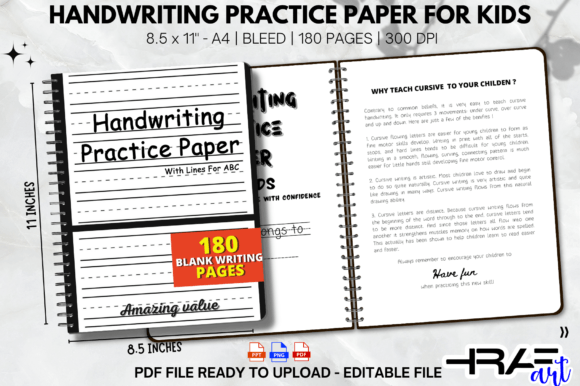
A generous number of pages—such as 180 pages of high-quality handwriting practice paper—provides enough room for consistent practice without running out of material. This is especially important for homeschooling families or teachers who need a reliable resource for an entire school term. With plenty of pages, children can progress at their own pace without feeling rushed.
Clear, Uncluttered Layout
Simple and beautifully designed pages reduce distractions and help children focus on the task at hand. A clean layout with enough white space prevents overwhelm and allows the child to concentrate on letter formation. Professional design matters because it makes the paper inviting to use, not intimidating.
Age-Appropriate Specifications
High-quality handwriting practice paper is typically designed for children ages 6 and up, when fine motor skills are developed enough to begin formal handwriting instruction. Importantly, no cursive experience is required, making it suitable for complete beginners who are just learning the alphabet or transitioning to more consistent handwriting.
How Handwriting Practice Paper Helps Kids Learn Letters and Numbers
Learning to write letters and numbers is a multi-step process that involves visual recognition, motor planning, and physical execution. Handwriting practice for kids using structured paper supports each of these stages in a natural, progressive way.
Building Letter Recognition
When children trace and write letters on lined paper, they reinforce the visual shape of each letter in their memory. The dotted center line helps them understand the proportions of uppercase versus lowercase letters, and consistent repetition builds familiarity. Over time, this visual-motor pairing strengthens the neural connections that support both reading and writing.
Developing Fine Motor Control
Forming letters requires precise control of the small muscles in the hand and fingers. Handwriting practice paper with wide lines gives children room to move their pencil freely while still staying within boundaries. As they practice, their motor control improves, leading to neater, more consistent writing. This is a gradual process that requires patience and regular practice.
Encouraging Proper Letter Formation
One common challenge for young writers is learning the correct stroke order for each letter. Handwriting practice paper that includes dashed or dotted midline guides makes it easier for children to see where to start and stop each stroke. With repeated practice, they internalize the correct formation and begin to write more automatically.
Building Confidence Through Progress
There's something deeply satisfying about seeing a page filled with well-formed letters. Handwriting practice paper gives children a tangible record of their progress. As they compare their earlier attempts with later ones, they gain a sense of accomplishment that motivates them to keep improving. This confidence spills over into other areas of learning.
Practical Tips for Using Handwriting Practice Paper at Home or in the Classroom
Having the right paper is only half the equation. To get the most out of handwriting practice for kids, it's important to use it in ways that are engaging, consistent, and supportive. Here are some actionable strategies for parents, teachers, and homeschoolers.
Start with the Basics: Letters and Numbers
Begin with simple letters that have straight lines (like "i," "l," and "t") before moving on to curved letters (like "a," "c," and "o"). Similarly, start with numbers that are easy to form, such as "1," "4," and "7." Use the dotted center line to show where each letter or number sits. Practice one or two letters per session to avoid overwhelming the child.
Incorporate a Variety of Activities
Handwriting practice doesn't have to be monotonous. Use the paper for tracing exercises, free writing, copying simple words, or even drawing shapes that reinforce motor skills. You can also use the editable PowerPoint file included with many practice paper sets to customize pages with the child's name, favorite words, or themed vocabulary. This personal touch makes practice more meaningful and fun.
Set a Regular Routine
Consistency is key when building any new skill. Set aside 10–15 minutes each day for handwriting practice. Short, focused sessions are more effective than longer, irregular ones. Use the 180 pages as a built-in structure—one page per day provides nearly six months of daily practice. This routine helps children develop discipline and see steady improvement.
Provide Positive Feedback
Celebrate effort, not perfection. Praise the child for trying, for making progress, and for paying attention to letter formation. Avoid criticizing messy writing—instead, gently guide them toward better technique. A supportive environment encourages children to keep practicing without fear of failure.
Use the Bonus Resources
Many handwriting practice paper products come with valuable extras. For example, the inclusion of a fully editable PowerPoint file allows you to create custom worksheets, while PNG 300 DPI files can be used for digital projects or printing additional pages. The 01 cover included gives you a ready-to-use front page if you're compiling a workbook. These resources add flexibility and extend the life of the practice material.
Who Benefits from Handwriting Practice Paper?
While handwriting practice paper is primarily designed for children, it is a versatile tool that serves a wide range of users and settings.
- Homeschooling Families: A full 180-page workbook provides a complete handwriting curriculum for the school year, with enough structure and flexibility to adapt to any teaching style.
- Teachers: The clean, professional design makes it easy to use in the classroom for daily warm-ups, literacy centers, or homework assignments.
- Parents: Whether supplementing schoolwork or introducing handwriting at home, parents can use the paper to give their child a head start in a fun, low-pressure way.
- Tutors and Therapists: Occupational therapists and reading specialists often use structured handwriting paper to support children with fine motor delays or dysgraphia.
No matter the setting, the goal is the same: to help children develop legible, confident handwriting that serves them throughout their education and beyond.
Clarifying Common Misconceptions About Handwriting Practice
There are a few common assumptions about handwriting practice that deserve clarification. First, some believe that children will naturally develop good handwriting without structured practice. While some children do pick it up easily, most benefit from explicit instruction and regular practice with appropriate tools. Second, there is a misconception that handwriting practice is only for young children. In reality, many older students and even adults use handwriting practice paper to refine their penmanship or transition to cursive. Finally, some think that digital tools make handwriting obsolete. On the contrary, handwriting remains a critical skill for note-taking, exams, and personal expression, and it supports brain development in ways typing cannot replicate.
How to Choose the Right Handwriting Practice Paper for Your Child
When selecting handwriting practice paper for kids, consider the following factors to ensure it meets your child's needs:
- Age and Skill Level: For children ages 6 and up who are beginning to write, wide lines with a dotted center are ideal. More advanced writers may benefit from narrower lines as they gain control.
- Page Count: A book with 180 pages offers long-term value and allows for consistent daily practice without needing to replenish materials frequently.
- Format: A PDF for instant download is convenient for printing at home or on demand. Digital formats also allow you to print only what you need, saving paper and money.
- Customizability: Products that include editable files (like PowerPoint) and high-resolution PNGs give you the freedom to tailor the paper to your child's interests or specific learning goals.
- Commercial Use Considerations: If you're a creator planning to use the paper for products on platforms like KDP, ensure you make modifications to avoid duplicate content issues. The editable format makes this straightforward.
Final Thoughts: Give Your Child a Head Start with Handwriting Practice
Handwriting is more than just a practical skill—it's a foundation for learning, self-expression, and confidence. By providing children with high-quality handwriting practice paper for kids, you give them the tools they need to succeed in school and beyond. The simple act of practicing letters and numbers on well-designed paper builds not only handwriting ability but also patience, focus, and pride in their work.
Whether you're a parent looking to support your child at home, a teacher seeking reliable classroom materials, or a homeschooler building a comprehensive curriculum, investing in a thoughtfully designed handwriting practice resource is a decision that pays dividends for years to come. With features like wide lines, dotted centers, 180 pages of content, and editable digital files, the right product can make handwriting practice a joyful and rewarding experience.
Remember, every great writer started with a single stroke. Give your child the head start they deserve, and watch their confidence and skills grow one letter at a time.