Creating a Practical Cleaning Schedule Journal for Your KDP Publishing Business
In the rapidly expanding world of Amazon KDP publishing, finding a niche that balances utility with market demand is essential for long-term success. Among the most consistent categories are planners, journals, and organizational tools. One format that has proven especially valuable is the cleaning schedule journal. Whether your audience includes busy parents, professional house cleaners, or individuals striving for a more organized home, a well-designed cleaning schedule journal can serve as both a practical tool and a profitable product. The key lies in the interior design, and a thoughtfully prepared Cleaning Schedule Journal KDP Interior can significantly streamline your workflow and elevate the final product.
Many self-publishers underestimate the importance of the interior layout. While cover design often grabs attention, it is the interior that determines whether a customer finds lasting value. A high-quality interior encourages repeat usage, positive reviews, and word-of-mouth recommendations. Understanding what makes a cleaning schedule journal effective—and how to leverage a premade interior to build your KDP catalog efficiently—can transform the way you approach this niche.
Why a Cleaning Schedule Journal Resonates with Modern Audiences
Household management has become increasingly complex. Between work commitments, family obligations, and the sheer volume of daily tasks, maintaining a clean and organized home often falls by the wayside. A cleaning schedule journal addresses this pain point directly by providing structure, accountability, and a sense of accomplishment. Unlike generic notebooks, a dedicated journal offers guided prompts, checklists, and tracking systems that help users break down overwhelming cleaning tasks into manageable routines.
For KDP authors, this translates into a product with clear intent. Buyers searching for cleaning schedules are not browsing for entertainment—they are seeking solutions. This high purchase intent means that if your product delivers on its promise, you are far more likely to earn positive feedback and repeat customers. Moreover, the cleaning schedule niche allows for multiple variations: weekly checklists, monthly deep-cleaning guides, seasonal task lists, and even commercial cleaning logs for professionals. A single interior design can serve as the foundation for several distinct products, each targeting a slightly different audience.
When you invest in a Cleaning Schedule Journal KDP Interior, you are not just buying a layout—you are buying a framework that can be adapted, rebranded, and scaled across your entire publishing line. This flexibility is particularly valuable for new publishers who want to test multiple niches without committing extensive design time upfront.
Key Features of a Professional-Grade Interior
Not all interiors are created equal. The difference between a mediocre journal and one that sells consistently often comes down to the details. A premium interior design includes several critical elements that enhance both functionality and aesthetics.
Page Size and Bleed Considerations
The dimensions of a paperback book significantly affect how users interact with the content. An 8.5″ x 11″ inch trim size is standard for practical journals, offering ample space for writing while remaining comfortable to handle. However, when preparing files for print-on-demand services like Amazon KDP, bleed margins are mandatory. A typical interior file should measure 8.625 x 11.25 inches to account for full-page elements that extend to the edge. This extra margin ensures that no content is cut off during the binding process. Failing to include proper bleed can result in thin white borders or trimmed text—a surefire way to frustrate customers and invite returns.
Page Count and Binding Durability
Customers often judge the value of a journal by its thickness. A 120-page interior strikes an excellent balance between substance and affordability. It provides enough space for several months of weekly tracking without feeling overwhelming or prohibitively expensive to print. For a cleaning schedule journal, 120 pages typically accommodate around 24 weeks of weekly checklists, plus additional pages for notes, deep-cleaning plans, and yearly overviews. This page count also keeps production costs low, allowing you to price competitively while maintaining healthy profit margins.
Color Mode and Readability
Black and white interiors remain the standard for low-cost, high-volume KDP products. While color interiors can be visually striking, they dramatically increase printing costs and reduce profit per sale. A clean, high-contrast black and white design is not only economical but also more practical for users who prefer to write in pen or pencil. The key is to ensure that all text and graphics remain legible when printed in grayscale. Avoid relying on color to convey meaning—use icons, shading, and varied font weights instead. A resolution of 300 DPI guarantees crisp text and sharp lines, even on standard book paper.
Editable File Formats for Customization
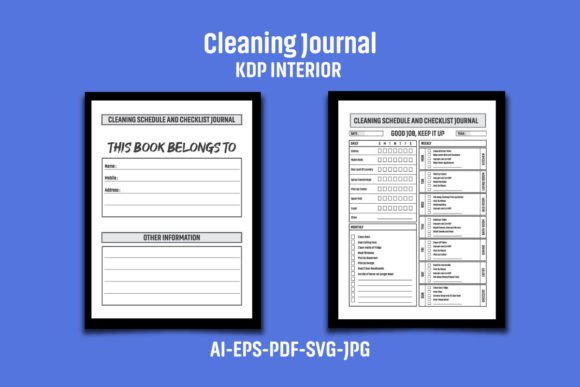
One of the most significant advantages of purchasing a premade interior is access to editable file formats. The standard package includes AI (Adobe Illustrator), EPS, PDF, JPG, and SVG files. The AI and EPS formats are especially valuable because they allow you to modify colors, adjust layouts, and add your own branding elements. For example, you might want to insert your logo, change the header font, or adjust the size of checkboxes to better suit your audience. Without editable source files, you would be locked into the original design, limiting your ability to differentiate your products from other publishers using the same template.
When working with these files, remember that Amazon KDP strictly monitors for duplicate content. Even if you purchase a licensed interior, you must add unique elements—such as your logo, a custom introduction page, or modified headers—before uploading. This step is not optional; it is essential for protecting your account and ensuring your listings remain active.
Practical Workflow for KDP Publishers
Integrating a premade cleaning schedule interior into your publishing process can be incredibly efficient if you follow a structured workflow. The files are typically delivered in a compressed ZIP folder, so the first step is extraction using software like WinRAR or built-in system tools. Once extracted, you will have access to all the format options.
Begin by opening the AI or EPS file in Adobe Illustrator. These versions are based on CS6, which means they are compatible with most modern design software without requiring the latest updates. Spend time reviewing each page spread, paying attention to margins, trim lines, and the placement of functional elements like checkboxes, date fields, and task lists. This is also the moment to insert your branding. A small logo on the title page or footer can go a long way toward establishing product identity and preventing content flagging.
After customization, export the final file as a single PDF with proper bleed settings. If you are unfamiliar with bleed setup in Illustrator, many online resources walk through the process step by step. The goal is a clean, print-ready file that passes KDP's automated review without errors. Testing a physical proof copy before going live is always advisable—catching a misalignment or font issue in a proof is far cheaper than dealing with returns.
For publishers who prefer a simpler route, the included JPG and PNG files can be assembled into a PDF using tools like Canva or Adobe Acrobat. However, this method offers less flexibility for customization and may result in lower resolution if not handled carefully.
Designing for User Experience and Retention
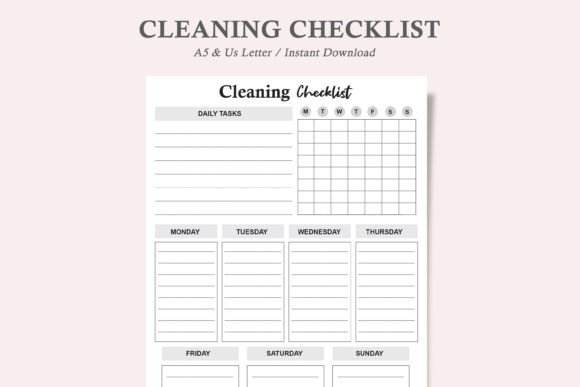
A cleaning schedule journal is only useful if people actually use it. The best interiors anticipate how users interact with the book over time. For example, including a table of contents or an index page helps users locate specific routines without flipping through every page. A dedicated notes section at the end of each week or month allows for reflections, adjustments, and reminders. Small touches like motivational quotes at the bottom of pages or a checklist for supplies can enhance the user experience without adding significant design complexity.
Another consideration is the layout of the checklists themselves. Some users prefer structured grids with specific time slots, while others favor open-ended bullet lists that they can customize. Offering a mix of both formats within the same journal caters to a broader audience. For instance, the first 60 pages might feature weekly cleaning schedules with pre-filled categories like "Kitchen," "Bathroom," and "Living Room," while the remaining pages could be blank templates for users to design their own routines.
Seasonal and deep-cleaning pages add further value. A "Spring Cleaning Checklist" or "Pre-Winter Home Prep" section transforms a simple journal into a year-round resource. These special pages also serve as marketing differentiators when you compare your product to competitors that offer only basic weekly layouts.
Marketing and Positioning Your Cleaning Schedule Journal
Once your interior is ready and your book is published, the next challenge is visibility. Successful KDP products often target specific sub-audiences rather than trying to appeal to everyone. For a cleaning schedule journal, consider these angles:
- Busy professionals: Emphasize time-saving layouts and quick-reference checklists.
- New homeowners: Focus on establishing routines for maintaining a first home.
- Eco-conscious users: Include pages for tracking cleaning product usage or DIY recipes.
- Commercial cleaners: Offer logs for client appointments, inventory, and inspection notes.
Keyword research is critical here. Terms like "home cleaning planner," "weekly cleaning checklist book," and "household management journal" are competitive but achievable with targeted listing optimization. Including "cleaning schedule journal" in your title, subtitle, and backend keywords can improve search visibility. The description should highlight not just what the book is, but what problem it solves. Use bullet points to list features like "120 pages of guided checklists" and "8.5x11 inch format with ample writing space."
Customer reviews often mention ease of use, layout clarity, and durability. If your interior is genuinely well-designed, those positive comments will accumulate, boosting your organic ranking over time.
Final Thoughts on Building a Sustainable KDP Line
Publishing a cleaning schedule journal is more than a single product launch—it is an opportunity to establish yourself in a niche that generates steady, passive income. By starting with a high-quality Cleaning Schedule Journal KDP Interior, you eliminate the steep learning curve of design while retaining full control over customization and branding. The combination of proper bleed settings, a thoughtful 120-page structure, and editable vector files gives you everything you need to create a professional-grade book that competes with established titles.
As you build your catalog, consider expanding into related niches such as meal planners, fitness logs, budget trackers, and gratitude journals. The same interior design principles apply across categories, and your growing familiarity with the formatting process will make each subsequent launch faster and more efficient. For publishers who are serious about treating KDP as a business rather than a hobby, investing in solid interior designs upfront pays dividends for years to come.
Remember that the ultimate goal is to serve your customers. A cleaning schedule journal that genuinely helps someone regain control of their home environment is a product worth creating. With the right interior, careful customization, and strategic marketing, your journal can stand out in a crowded marketplace and build a loyal following of users who return to your brand again and again.