50 Doodling Prompts for Anxiety: A Practical Tool for Mindful Self-Expression
Managing anxiety often requires a combination of strategies, from professional therapy to daily habits. For many people, creative activities offer a low-pressure way to calm the mind and process emotions. 50 Doodling Prompts for Anxiety is a structured yet flexible product designed to help individuals use drawing as a daily mindfulness practice. Instead of staring at a blank page, users receive a specific prompt each day, giving them a starting point for creative expression. This article examines what the product offers, who it may benefit, and how it compares to other anxiety-management tools.
What Is 50 Doodling Prompts for Anxiety?
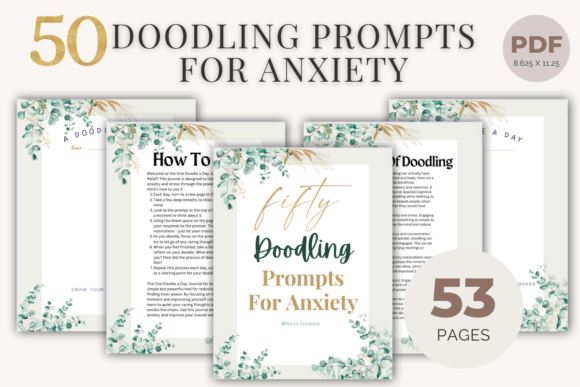
This product consists of a journal-style format that includes a front cover, a section on how to use the journal, an overview of the benefits of doodling, and 50 unique prompts with dedicated space to write or draw. The prompts are designed to be accessible to all skill levels, from experienced artists to complete beginners. Examples include Draw your happy place, Create a mandala, and Illustrate a quote that brings you comfort. Each prompt encourages a brief, focused creative session, typically lasting a few minutes, making it easy to integrate into a daily routine.
The core idea is that doodling, when guided by thoughtful prompts, can serve as a form of active meditation. It shifts attention away from anxious thoughts and onto the present moment, while the physical act of drawing can have a calming effect on the nervous system. The finished artwork also provides a tangible record of progress and personal expression over time.
Why Consider a Doodling Prompt Journal?
People exploring anxiety-management tools often look for activities that are low-cost, portable, and require no special skills. Doodling meets all these criteria. A structured prompt journal removes the common barrier of not knowing what to draw, which can itself be a source of frustration. With 50 Doodling Prompts for Anxiety, the decision-making is handled in advance, allowing the user to focus entirely on the act of creation.
Another reason someone might be drawn to this product is the desire for a non-digital activity. Many anxiety-management strategies involve screen-based apps or online resources. A physical journal offers a tactile, screen-free alternative that can be especially appealing for those who feel overwhelmed by digital overload. The act of putting pen to paper can be grounding in a way that typing on a keyboard is not.
Benefits, Tradeoffs, and Realistic Expectations
Understanding both the advantages and limitations of any tool is essential for making an informed decision. Below is a balanced look at what 50 Doodling Prompts for Anxiety offers and where it may fall short for some users.
Benefits
- Low barrier to entry: No artistic experience is required. The prompts are designed to be interpreted freely, so there is no pressure to produce a polished drawing.
- Structured yet flexible: Having 50 prompts provides variety and prevents the boredom that can come with repeating the same activity. Users can go through the prompts sequentially or pick one that matches their current mood.
- Mindfulness without formal instruction: The act of focusing on a drawing naturally promotes a state of flow, which is similar to the benefits of meditation. This can be easier for some people than sitting still and trying to clear their mind.
- Tangible progress tracking: Filling the pages creates a visual record of daily practice, which can reinforce a sense of accomplishment and self-care consistency.
- Portable and private: A journal can be taken anywhere and used in private, making it a discreet tool for managing anxiety in various settings.
Tradeoffs and Considerations
- Not a substitute for professional help: Doodling prompts can support mental wellness, but they are not a replacement for therapy, medication, or other clinical interventions for diagnosed anxiety disorders.
- Limited depth: Some users may find that brief daily doodles do not provide enough time or depth to fully process complex emotions. For deeper emotional work, a traditional journaling or art therapy approach may be more appropriate.
- Personal preference matters: Not everyone finds drawing relaxing. Some people may feel self-conscious about their artistic ability, which could add stress rather than reduce it. The product is most effective for those who are open to creative expression without judgment.
- Repetition risk: After completing the 50 prompts, a user may need to find additional resources or develop their own prompts to continue the practice. The product is finite in scope.
When Is 50 Doodling Prompts for Anxiety a Strong Fit?
This product works well in several specific situations. If you are someone who:
- Feels overwhelmed by open-ended creative tasks but wants a gentle starting point
- Prefers a screen-free, tactile activity for winding down
- Is looking for a simple, low-commitment way to introduce daily mindfulness
- Enjoys variety and likes having a new idea each day
- Wants a private, portable tool that can be used at home, during a commute, or on a break
In these cases, the structured format of 50 Doodling Prompts for Anxiety can be a natural fit. It provides just enough direction to remove friction while leaving ample room for personal interpretation.
When Alternatives May Be Worth Considering
While the prompt journal has clear strengths, it is not the right tool for everyone. You might want to consider other options if:
- You need more comprehensive support: If anxiety significantly impacts daily functioning, a structured program, therapy, or app-based cognitive behavioral therapy (CBT) tools may be more appropriate.
- You prefer verbal or written expression: Some people find greater relief in writing, talking, or movement-based activities like yoga or walking. A doodling journal may feel too visual or too static.
- You are looking for a social experience: This journal is a solitary activity. If you benefit from group support or shared creativity, an online community or in-person art class could be more engaging.
- You want a more open-ended creative practice: Some artists or experienced doodlers may prefer a blank sketchbook with no prompts, allowing complete freedom. The structure of prompts could feel limiting rather than liberating.
- You are seeking a long-term solution: With only 50 prompts, this product is best viewed as a short-term introduction or supplement. For a sustained daily practice, you may need to combine it with other resources or use it as a starting point.
Practical Decision-Making Insights
When evaluating whether 50 Doodling Prompts for Anxiety aligns with your goals, consider the following questions:
- What is your primary goal? If you want a quick, low-pressure way to practice mindfulness daily, this product is likely a good match. If you need deeper emotional processing or clinical support, look beyond creative prompts.
- How do you feel about drawing? If you are neutral or positive about doodling, you will probably benefit. If the idea of drawing causes anxiety, starting with a single prompt and a simple pen may still work, but be honest with yourself about your comfort level.
- How much time can you realistically commit? The product works best with a few minutes each day. If you cannot carve out even a short window, the journal may sit unused. Consider whether a weekly format would be more realistic for your schedule.
- Do you prefer structure or freedom? This product leans toward structure. If you thrive on open-ended exploration, a traditional sketchbook might serve you better. If you appreciate having a clear task, the prompts will feel supportive.
- What is your budget and space? The journal is a one-time purchase with no recurring costs. It takes up minimal physical space. For those who prefer digital tools, free apps with similar prompts are available, though they lack the tactile experience.
Determining Alignment with Your Needs
Ultimately, 50 Doodling Prompts for Anxiety is best understood as a supportive tool rather than a standalone solution. It is particularly effective for people who want to build a daily mindfulness habit in a creative, low-pressure way. The product shines when used as a complement to other wellness practices, such as therapy, exercise, or journaling.
If you are curious about whether this format works for you, consider trying a few sample prompts on your own before purchasing. For example, take two sheets of paper, write Draw your happy place on one and Create a mandala on the other, and spend five minutes on each. If the experience feels calming and enjoyable, the full journal will likely be a worthwhile addition to your routine. If it feels frustrating or irrelevant, you have saved money and learned something valuable about your preferences.
In a landscape of anxiety-management products, this journal occupies a specific niche: it is simple, accessible, and designed for consistency over intensity. For the right person, those qualities can make a meaningful difference in daily well-being.